Lighting
Picking Bulb Color Temperature Room by Room
Kelvin ratings change how paint, wood and skin read. Warm 2700K suits living rooms and bedrooms, while 3000K to 3500K holds up in kitchens and baths.
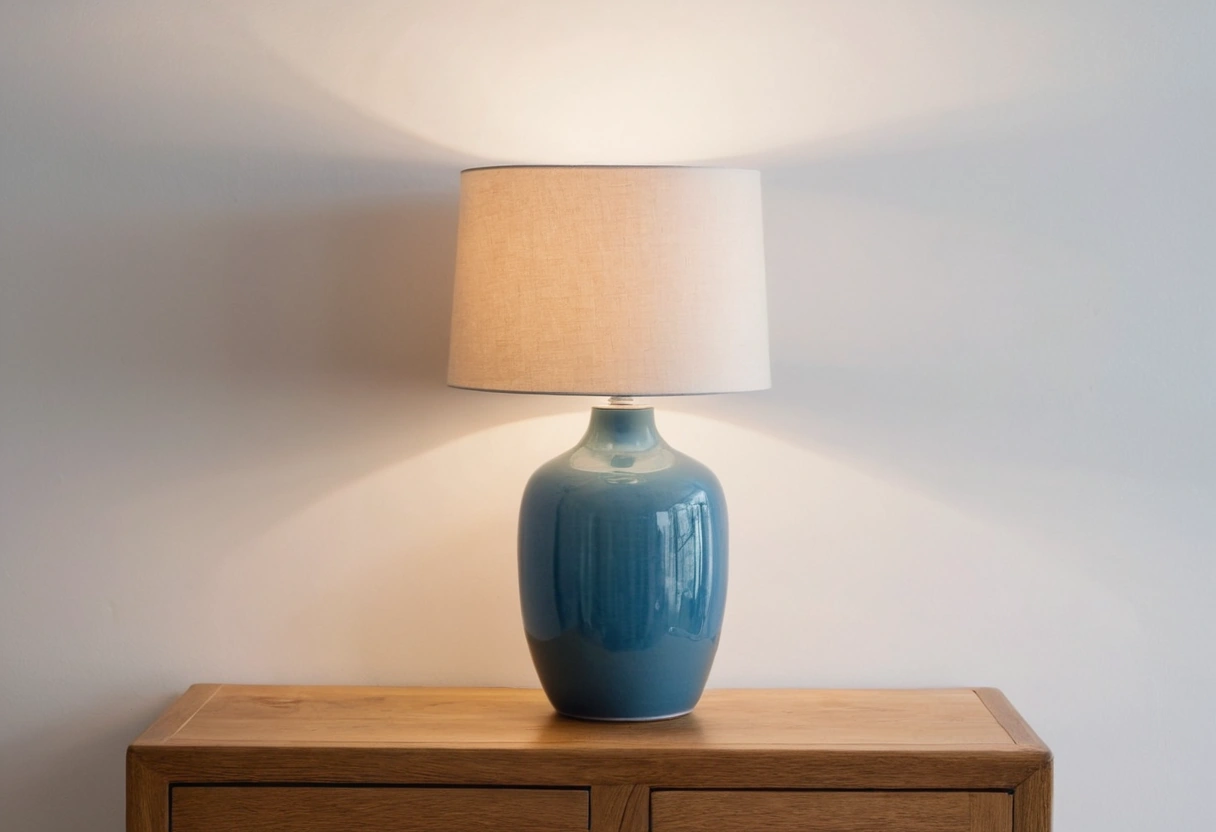
Bulb color temperature, measured in kelvin, decides whether wood reads warm, whether white paint reads clean and whether skin looks healthy in a mirror. Warm 2700K suits living rooms and bedrooms, 3000K suits kitchens and bathrooms with warm finishes, and 3500K to 4000K suits garages, laundry rooms and workshops.
Kelvin is the number people get wrong most often when replacing bulbs one at a time. A single 5000K bulb in a lamp beside four 2700K bulbs makes the whole room look broken, and the household usually blames the lamp.
What do the kelvin numbers actually mean?
Lower kelvin means more red and yellow in the light, and higher kelvin means more blue. A candle sits near 1800K, a traditional incandescent bulb near 2700K, midday daylight near 5500K to 6500K. The scale is counterintuitive: the light people call warm carries the lower number.
| Room | Recommended | Why |
|---|---|---|
| Living room, bedroom | 2700K | Flatters skin and wood, matches the incandescent look people expect at home |
| Kitchen with warm cabinets | 2700K to 3000K | Keeps wood and brass from turning grey |
| Kitchen with white or grey cabinets | 3000K | Keeps white finishes from reading yellow |
| Bathroom vanity | 3000K | Close enough to daylight for makeup, warm enough at night |
| Home office | 3000K to 3500K | Alert without going clinical |
| Laundry, garage, workshop | 4000K | Color accuracy for sorting and detail work |
One 5000K bulb among four at 2700K makes the whole room look broken, and the household blames the lamp.
Should every room in a house match?
Rooms visible from each other at the same time should match. Rooms separated by a door or a hallway can differ without anyone noticing. In an open plan where the kitchen, dining and living areas share sightlines, run one temperature across all three, because the eye compares them directly.
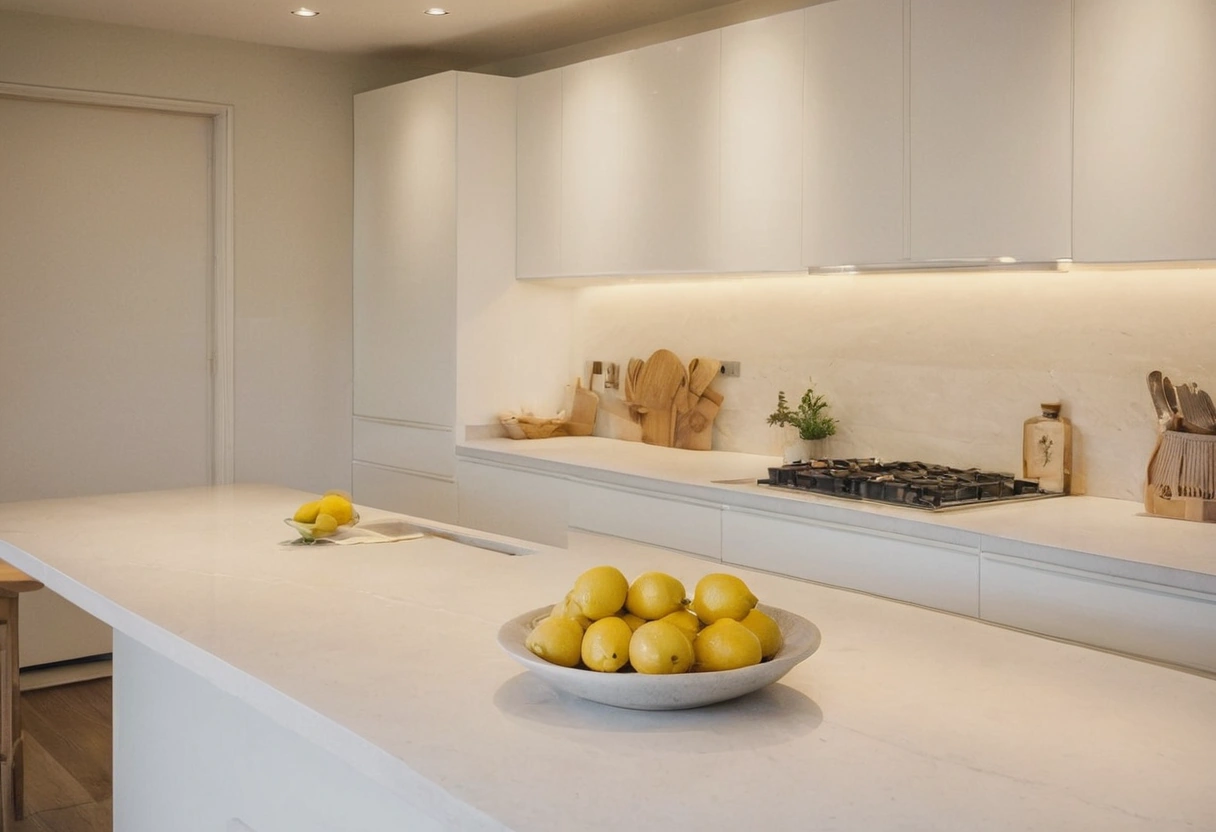
A laundry room at 4000K behind a closed door creates no conflict with a 2700K hallway. A 4000K under-cabinet strip in an open kitchen conflicts with 2700K pendants over the same island, and that mismatch is visible from the sofa.
What is CRI and does it matter more than kelvin?
Color rendering index measures how accurately a light source shows color compared with a reference. A CRI of 90 or above keeps reds, wood tones and skin looking correct, while a CRI in the low 80s makes red upholstery look brown and skin look tired. In a house, CRI is worth paying for in kitchens, bathrooms and any room with art, and it works alongside the layered lighting plan rather than replacing it.

The specification to look for is CRI 90 plus with an R9 value above 50, since R9 covers deep red and is the value cheap LEDs sacrifice first. Two bulbs at the same 2700K can look noticeably different when one has CRI 82 and the other has CRI 95.
What about tunable and dim-to-warm bulbs?
Dim-to-warm LEDs drop from about 2700K toward 2200K as they dim, copying the behavior of an incandescent bulb on a dimmer. That behavior is the reason many people prefer old bulbs without being able to say why. Dim-to-warm costs more per fixture and pays off in living rooms and dining rooms where the evening setting matters.
Fully tunable fixtures shift across a wide kelvin range on command. They suit a home office or a bathroom used both at 6 a.m. and at 10 p.m. They also add a control layer, and a household that has to open an app to change a bathroom light will leave it wherever it landed.
How to fix a room that already looks wrong
- Pull one bulb from each fixture in the room and read the kelvin and CRI printed on the base.
- Replace every bulb in the room at once with a single specification rather than swapping as they fail.
- Check the under-cabinet and closet strips, since those are usually the mismatched ones.
- Confirm all the bulbs on one dimmer share a brand and driver type, because mixed drivers flicker.
- Judge the result at night with the shades down, the same way a paint sheen gets judged, since daylight hides the difference the household actually lives with.
Bulbs are the cheapest lever in a house. Replacing a room's worth at one specification costs less than a dinner out and changes how the room reads more than a coat of paint.