Lighting
Layered Lighting in Plain English: What Each Fixture Is For
Ambient, task and accent lighting are three separate jobs with three separate switches. A room lit by recessed cans alone is doing one job badly.
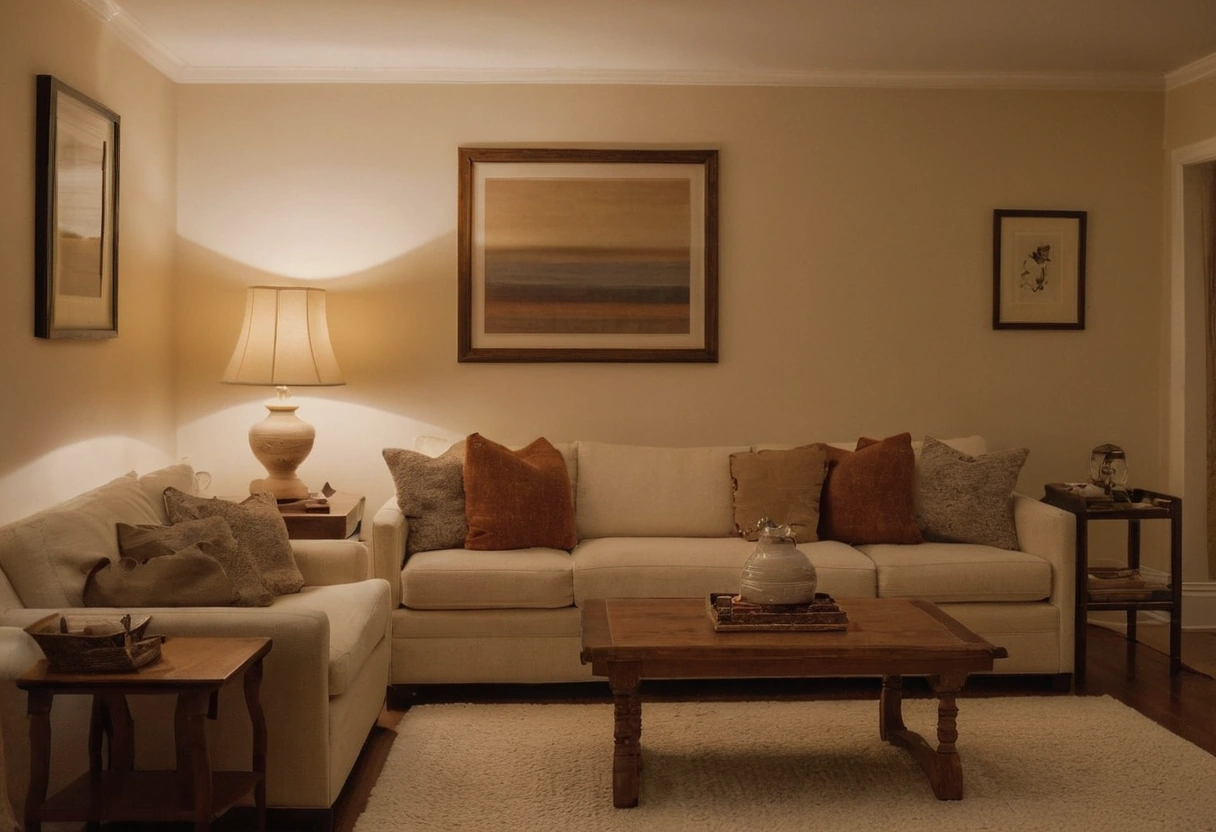
Layered lighting means three separate jobs on three separate switches: ambient light that fills the room, task light aimed at a surface where work happens, and accent light that puts brightness on something worth looking at. A room lit by recessed ceiling cans alone is doing the first job and skipping the other two, which is why it reads flat at night.
The vocabulary sounds like a showroom. The underlying idea is simple. A room needs light coming from more than one height, and the household needs to be able to turn parts of it off.
What is ambient lighting for?
Ambient light sets the base level so a person can walk through the room and see faces. It usually comes from the ceiling, and it wants to be even rather than bright. A living room with 6 recessed fixtures on a dimmer, or one central fixture plus two wall sconces, covers ambient adequately for a 14 by 16 foot space.
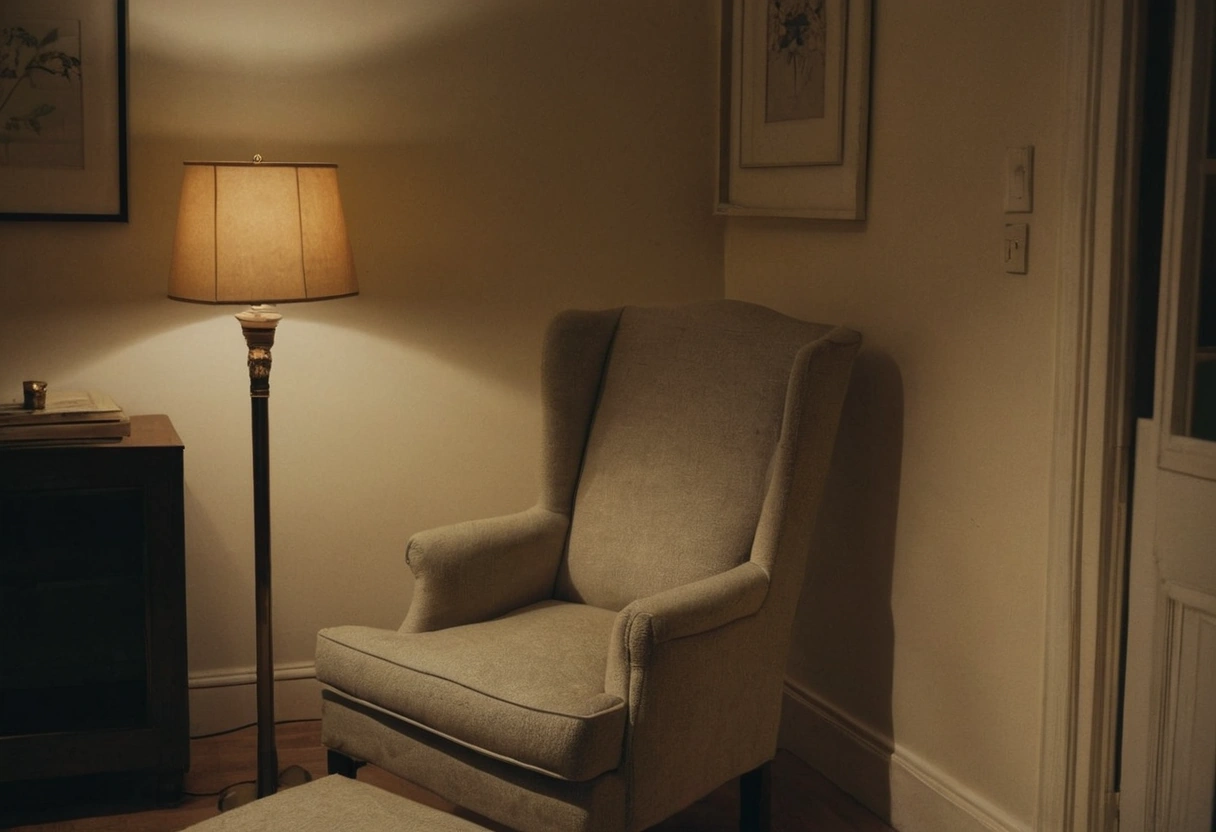
The common mistake is treating ambient as the whole plan. Ceiling light casts downward, so it puts shadow under eyebrows, under cabinets and under the nose. A room lit only from above at night looks like an office after hours, and no paint color fixes that.
What counts as task lighting?
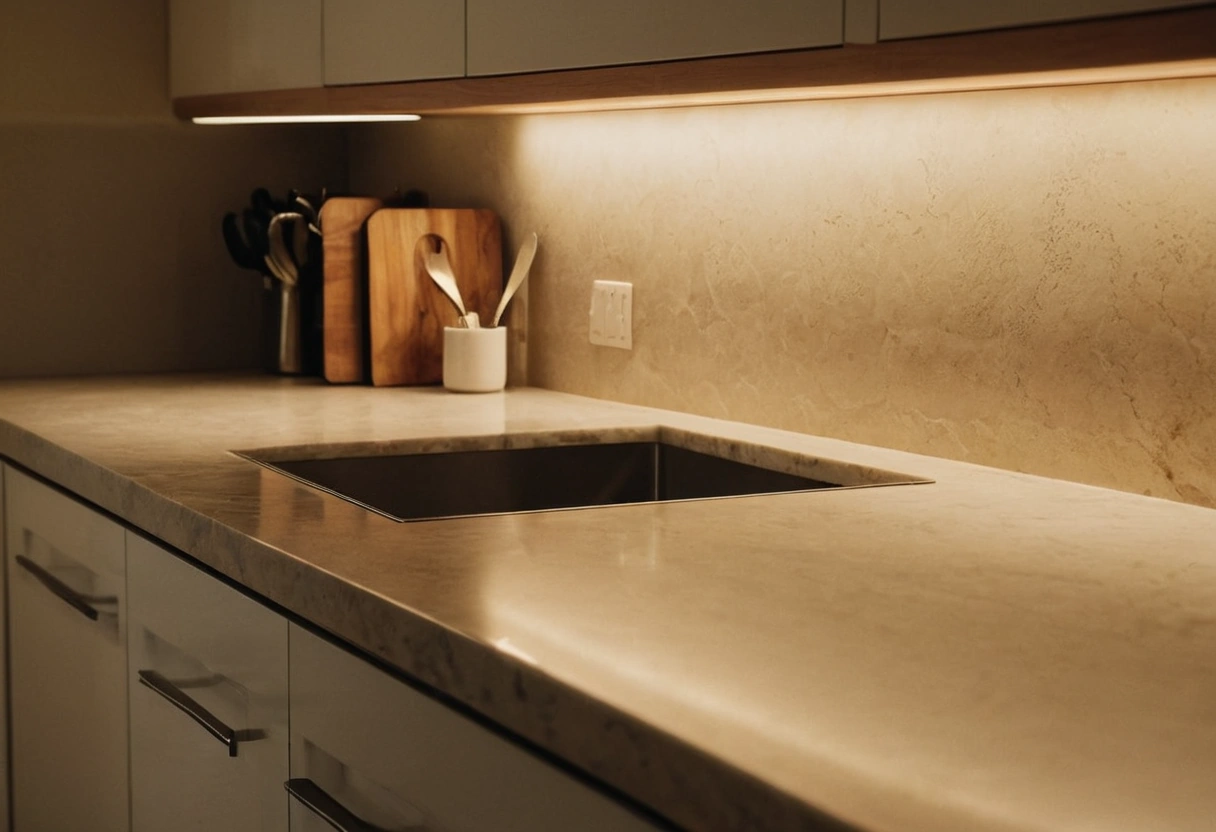
Task lighting sits close to the surface where something happens: a countertop, a desk, a reading chair, a mirror. It should come from a position that does not put the user's own shadow on the work. Under-cabinet lights sit in front of the person at a counter, and a reading lamp sits beside and slightly behind the shoulder.
| Activity | Fixture | Position |
|---|---|---|
| Counter prep | Under-cabinet strip | Front edge of the upper cabinet, not the back |
| Reading in a chair | Floor or table lamp | Beside the shoulder, shade bottom near eye level when seated |
| Face at a mirror | Sconces or a vertical bar | Both sides of the mirror at roughly 66 in to center |
| Desk work | Adjustable task lamp | Opposite the writing hand |
| Stairs | Wall or step lights | Low, aimed across the tread |
A room needs light coming from more than one height, and the household needs to be able to turn parts of it off.
Does accent lighting matter in a normal house?
Accent light gives the eye somewhere to rest, and it does more for how a room feels than any additional ambient fixture. A picture light over art, a small uplight behind a plant, or a lamp on a console at the far end of a room all serve the same purpose: they create a bright point at a distance from the seating.
Accent light works at low output. A 3 watt LED picture light reads clearly in a room where ambient sits at 30 percent. Accent lighting is the cheapest layer to add after the fact, since much of it plugs in.
How many switches does a room need?
Each layer needs its own control, which puts most rooms at three switches or three channels on a dimmer plate. A living room that runs ambient, lamps and accent on a single switch cannot produce an evening setting, because the only options are all on and all off.
Plan switching during electrical rough-in, not after drywall. Adding a switch leg later means opening a wall or falling back on smart bulbs, which then depend on a hub, a phone and a working network to turn a lamp on.
How do dimmers change the plan?
Dimming turns one fixture into several settings, and it lets a household use brighter fixtures without living under them. Specify dimmable drivers on every LED fixture, match the bulb color temperature across the room, and match the dimmer type to the driver, since an incompatible pairing produces flicker and buzz at low output.
Deep dimming is worth asking about. Many inexpensive LED fixtures stop dimming smoothly below about 20 percent and cut out. Fixtures rated to 1 percent or lower cost more and are the difference between an evening room and a lecture hall.
A three-layer plan for a standard living room
- Ambient: 6 recessed fixtures on a dimmer, spaced roughly 6 to 8 feet apart and kept 24 to 30 inches off the walls so they wash the room rather than the trim.
- Task: two lamps on switched outlets, one at the primary reading chair and one at the sofa end table.
- Accent: one picture light or one uplight at the far wall, on its own switch.
That plan costs one additional switch leg and two switched outlets over a bare recessed-can layout. The Uptown House considers it the highest return available in a residential electrical budget.