Materials
What Engineered Wood Floors Do Better Than Solid Oak
Engineered flooring wins on slabs, over radiant heat and in humid climates. Solid oak wins on refinishing count and resale expectation.
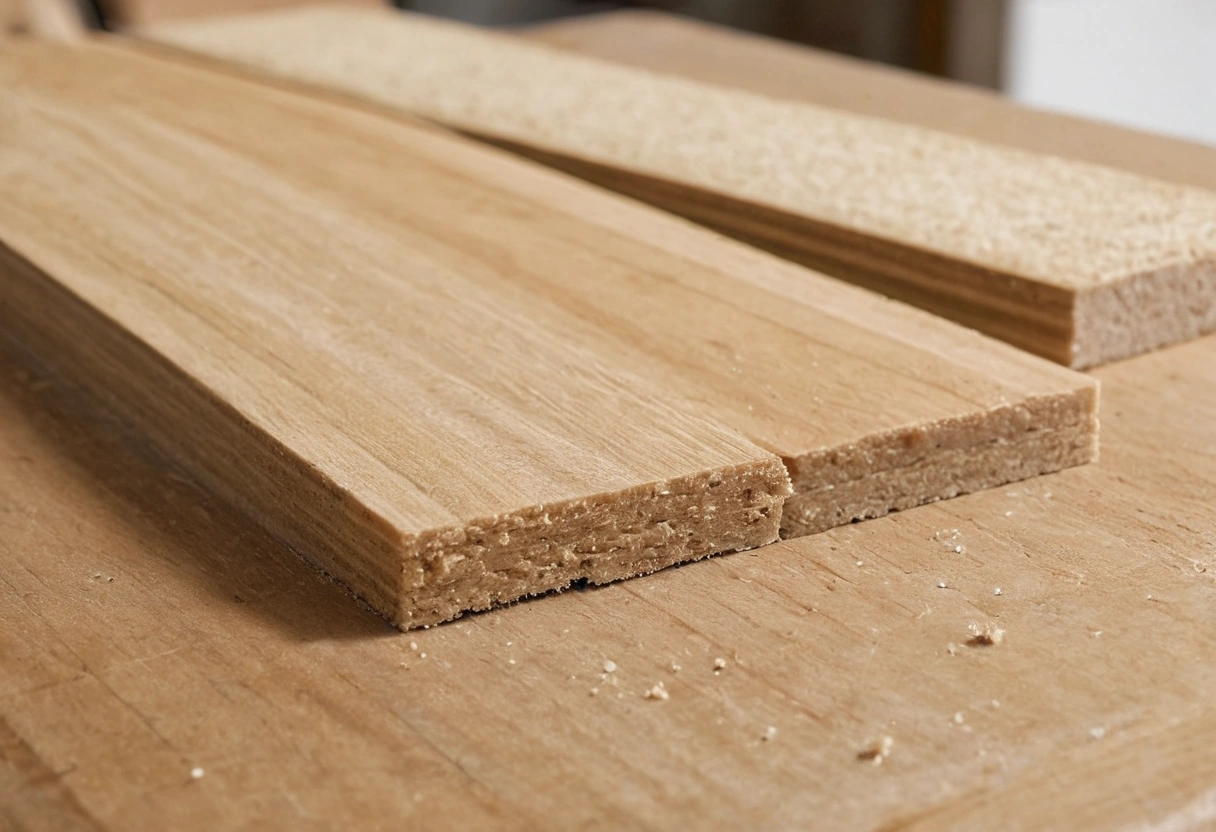
Engineered wood flooring outperforms solid oak on concrete slabs, over radiant heat and in climates with wide humidity swings, because its plywood core moves less across the grain. Solid oak outperforms engineered flooring on refinishing count, since a 3/4 inch solid board tolerates several sandings while a thin wear layer tolerates one at most.
Both products are real wood on the surface. The argument is about what sits underneath and how the floor behaves in a house that gets humid in July and dry in January.
What makes engineered flooring more stable?
Engineered boards are built from cross-laminated plies with a hardwood wear layer on top. Each ply runs perpendicular to its neighbor, so the layers restrain each other when humidity changes. Solid wood has no such restraint and expands across its width, which is why solid installations need expansion gaps at every wall.
That stability decides where each product can go:
| Location | Engineered | Solid |
|---|---|---|
| Above-grade over wood subfloor | Works | Works |
| Over concrete slab | Works, glue or float | Requires a built-up subfloor |
| Basement, below grade | Works with vapor control | Not recommended |
| Over radiant heat | Works, confirm with manufacturer | Risky, cupping and gapping |
| Wide planks over 5 in | Preferred | Moves noticeably in dry season |
How many times can each floor be refinished?
A 3/4 inch solid oak floor can typically be sanded and refinished 4 to 6 times over its life, since roughly 1/4 inch of wood sits above the tongue. An engineered floor can be refinished as many times as its wear layer allows, which means once for a 2 millimeter layer and two or three times for a 4 to 6 millimeter layer.
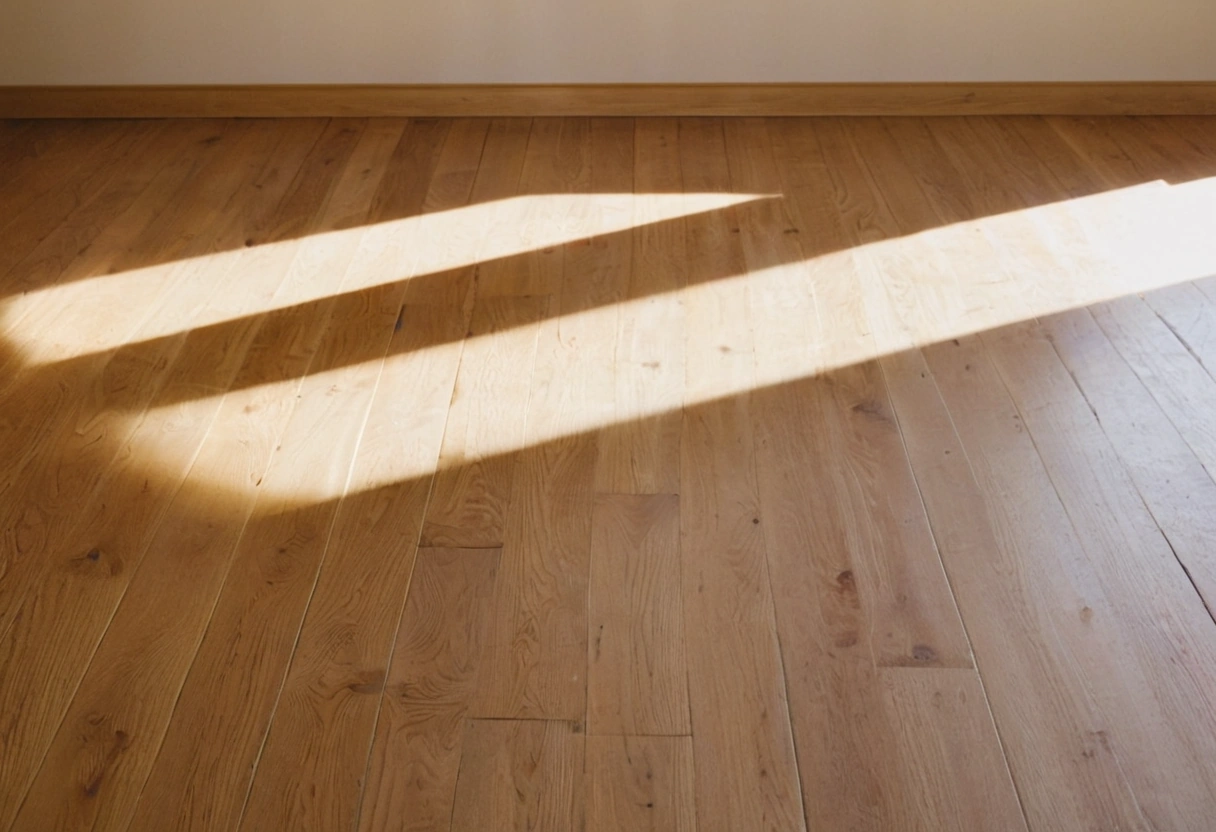
Wear layer thickness is the number to demand from a supplier, and it is the number marketing pages hide. An engineered floor with a 0.6 millimeter veneer cannot be sanded at all, and a scratch through the veneer is permanent.
Wear layer thickness is the specification that decides an engineered floor's whole life, and it is the one hardest to find on the product page.
Does plank width change the decision?
Wide planks amplify seasonal movement, because movement is proportional to board width. A 3 inch solid oak strip might open a hairline gap in February, while an 8 inch solid plank in the same room can open a gap wide enough to catch a fingernail. Engineered construction removes most of that difference, which is why nearly every wide-plank floor sold today is engineered.
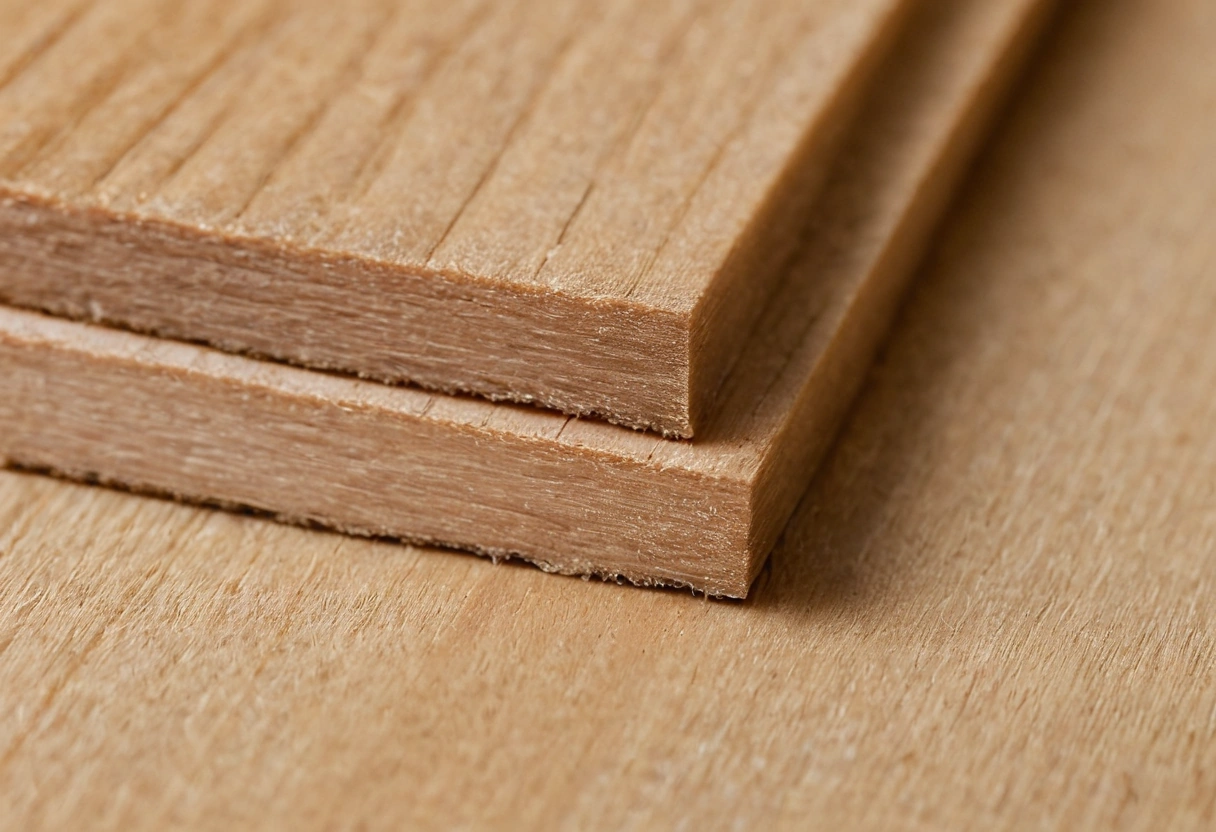
Households that want 7 or 8 inch planks should plan on engineered material regardless of budget. Households happy with 3 to 5 inch boards can choose freely.
What about site-finished versus prefinished?
Site-finished floors get sanded flat after installation and receive a continuous finish film, so there are no bevels between boards and no seams for grit to collect. Prefinished floors arrive with a factory-cured aluminum oxide finish that is harder than anything applied on site, and they install in a day rather than a week.
The tradeoff is repairability against durability. A site-finished floor can be spot-repaired and recoated. A prefinished floor resists scratching longer and cannot be recoated without sanding off the factory finish.
What does humidity control have to do with it?
Wood floors need indoor relative humidity kept roughly between 35 and 55 percent year round, and manufacturers void warranties outside that band. A house that runs at 20 percent humidity in January will gap any wood floor, engineered included, and the fix is a humidifier rather than a flooring product.
Acclimation matters as much. Flooring should sit in the room where it will be installed, unwrapped, until its moisture content matches the subfloor. Skipping acclimation to save three days on a remodel schedule causes gaps that show up the following season.
What to confirm before ordering
- Wear layer thickness in millimeters, in writing.
- Core material, since a plywood core outperforms a fiberboard core around moisture.
- Installation method allowed by the manufacturer for the specific subfloor, including any transition into a mudroom floor that takes salt and standing water.
- Finish type and its warranty term for residential use.
- The humidity range required to keep the warranty valid, and whether the house can hold it.
The last item disqualifies more floors than price does, and almost nobody checks it before signing.